Sydney Passive Fire Learning
What Is
Passive Fire?
Understanding how passive fire protection systems help slow the spread of fire and smoke throughout buildings.
Passive Fire Protection
Slowing The Spread Of Fire & Smoke
Passive fire protection refers to building systems designed to slow the spread of fire and smoke throughout buildings.
These systems form part of the building structure and work continuously without requiring activation during a fire event.
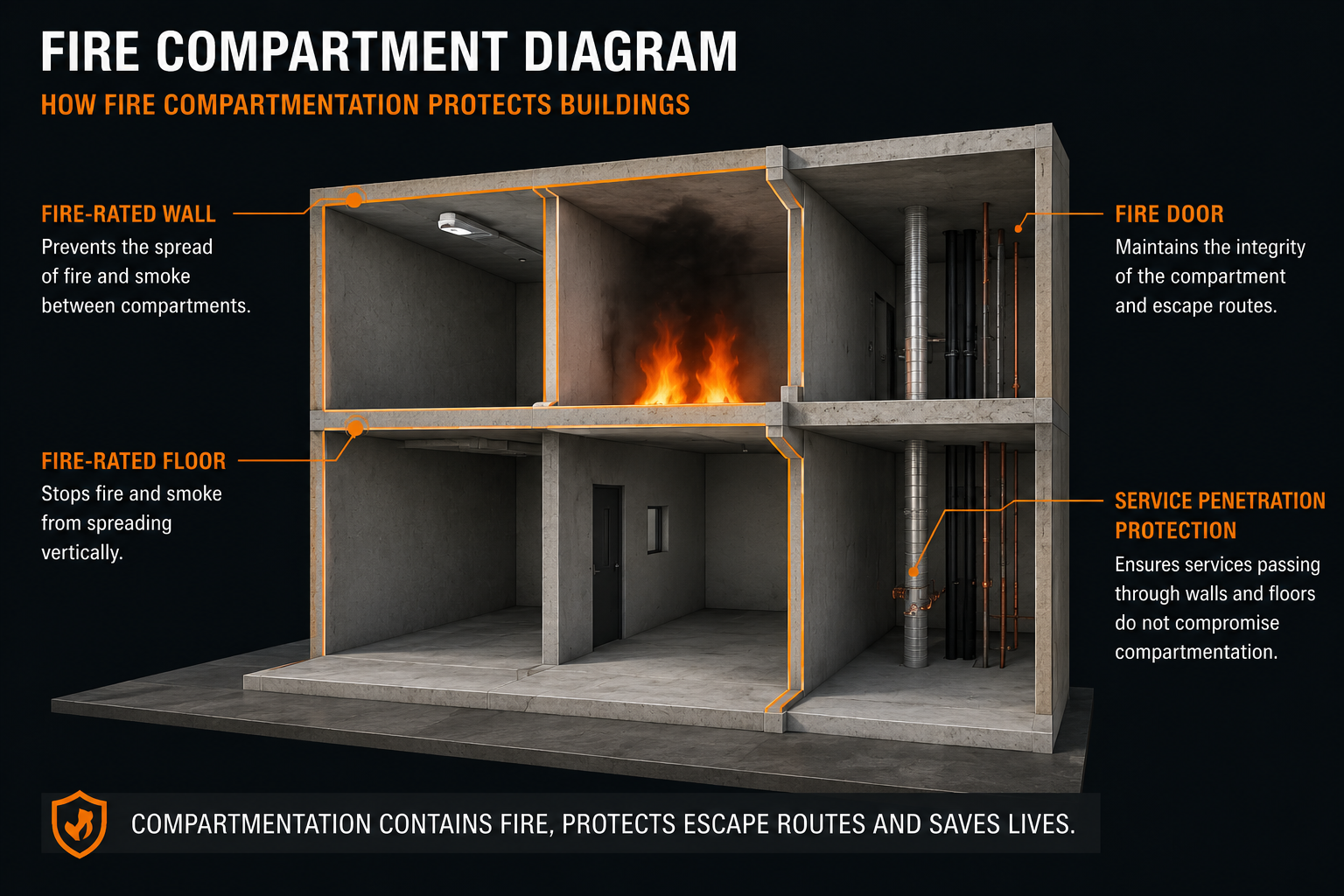
Passive fire systems help protect occupants, escape routes and property by maintaining fire compartmentation throughout buildings.
Active vs Passive Fire
Understanding The Difference
Passive Fire
Built Into The Building
Fire-rated walls and floors
Fire doors and smoke seals
Fire stopping systems
Compartmentation barriers
Fire-rated construction systems
Active Fire
Activated During Fire Events
Sprinkler systems
Fire alarms
Smoke detection systems
Emergency warning systems
Fire extinguishers
Passive Fire Elements
Common Passive Fire Systems
Fire-Rated Walls
Fire-rated walls divide buildings into separate fire compartments.
Fire Doors
Fire doors help protect escape routes and limit fire spread.
Fire Stopping Systems
Fire stopping protects openings created by pipes, cables and ducts.
Fire-Rated Floors
Fire-rated floor systems reduce vertical fire spread between levels.
Smoke Seals
Smoke seals assist with limiting smoke movement through door gaps.
Compartmentation Systems
Passive fire systems work together to maintain fire compartments.
Australian Standards
AS1530.4 Fire-Rated Systems
AS1530.4 is the primary Australian Standard used to test fire-rated building systems including walls, floors, doors and service penetrations.
These systems are tested in controlled furnace conditions to determine how long they can resist the spread of fire and smoke.
Understanding tested systems assists with inspections, compliance reviews and remediation planning throughout existing buildings.
Continue Learning
Explore More Passive Fire Topics
Continue learning about fire compartmentation, service penetrations, fire doors and passive fire compliance workflows.