Sydney Passive Fire Learning
Fire Door Inspections
& Compliance
Understanding fire door systems, common defects and passive fire compliance workflows throughout commercial buildings across Sydney and NSW.
What Are Fire Doors?
Protecting Escape Routes & Compartments
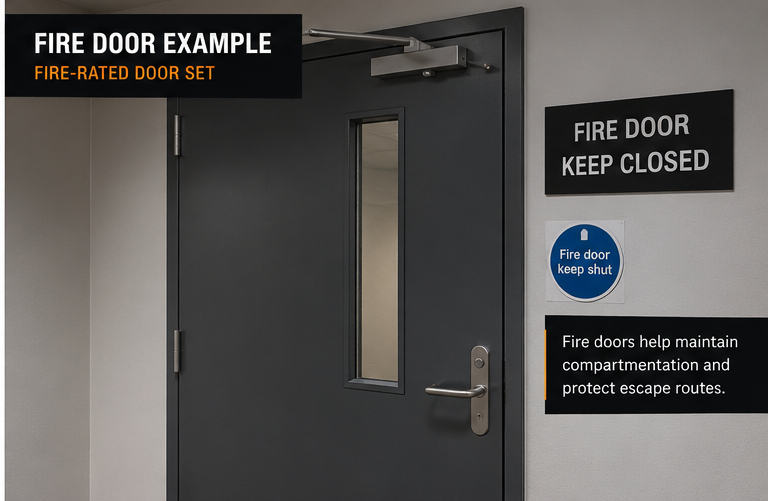
Fire doors form part of a building’s passive fire protection system and are designed to help slow the spread of fire and smoke between fire compartments.
Correctly functioning fire doors assist with protecting occupants, escape routes and separated spaces throughout buildings.
Fire doors must remain in good condition and should not be modified in ways that compromise fire resistance performance.
Common Fire Door Issues
Fire Door Defects
Excessive Door Gaps
Large perimeter gaps can allow smoke and fire to spread between fire compartments.
Missing Smoke Seals
Damaged or missing smoke seals reduce the effectiveness of fire doors protecting escape routes.
Damaged Door Closers
Faulty or disconnected door closers can prevent fire doors from self-closing correctly.
Non-Compliant Modifications
Holes, unapproved hardware and field modifications can compromise fire door performance.
Damaged Frames
Damaged or altered frames may affect the fire resistance performance of the door assembly.
Threshold Gaps
Large gaps beneath fire doors can reduce smoke containment performance.
Fire Door Inspections
Identifying Common Compliance Issues
Fire door inspections help identify issues affecting compartmentation performance throughout buildings.
Common issues include excessive gaps, missing smoke seals, damaged hardware and non-compliant modifications.
Inspections assist building owners, contractors and compliance teams with identifying remediation requirements and maintaining passive fire systems.
Australian Standards
Fire-Rated Door Systems
Fire door systems form part of the overall passive fire strategy used to maintain compartmentation throughout buildings.
Fire-rated systems tested to AS1530.4 are designed to resist the spread of fire and smoke in accordance with NCC compliance requirements.
Understanding fire door system requirements assists with inspections, defect identification and compliance reporting workflows.
Continue Learning
Explore More Passive Fire Topics
Continue learning about compartmentation, service penetrations, fire stopping systems and passive fire compliance workflows.