
Sydney Passive Fire Inspection Gallery
Real Inspection
& Defect Examples
Examples of passive fire defects, fire compartmentation issues and inspection findings identified throughout commercial buildings across Sydney and NSW.
Real Inspection Examples
Understanding Passive Fire Defects
Passive fire defects are often hidden within buildings and may remain unidentified until inspections are carried out.
Typical issues include unsealed penetrations, damaged fire separations, defective fire doors, missing smoke seals and non-compliant fire stopping systems.
These examples help demonstrate how passive fire defects can affect compartmentation performance throughout buildings.
Inspection Gallery
Common Passive Fire Issues
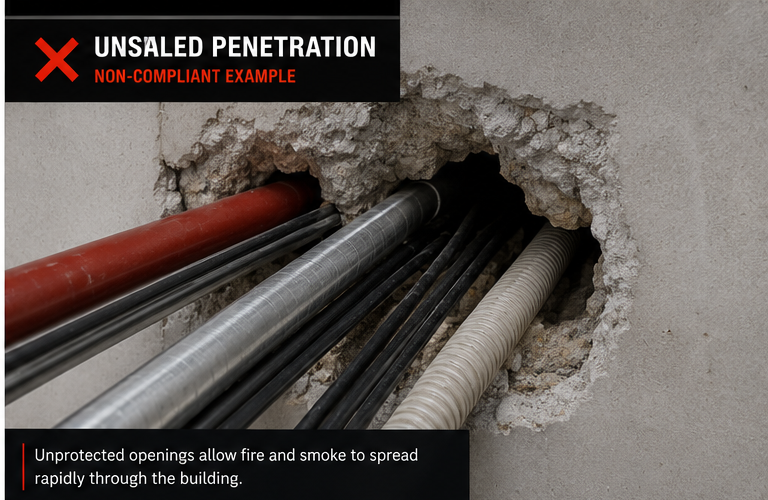
Unsealed Service Penetration
Unprotected cable penetration through a fire-rated wall identified during inspection.
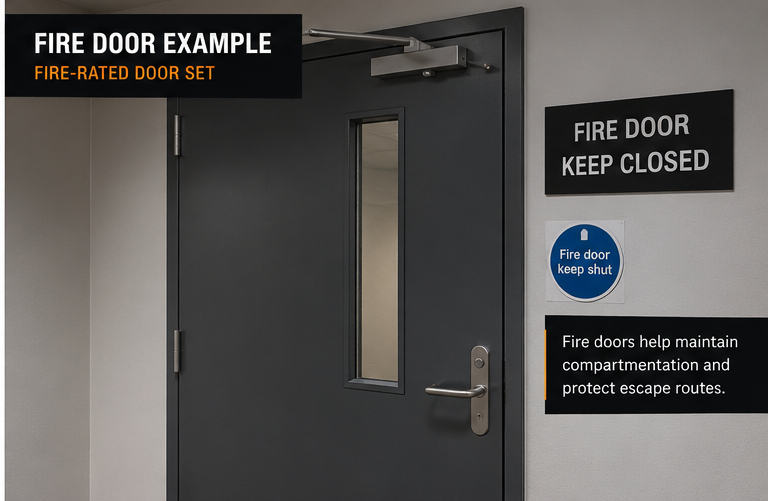
Fire Door Gap Defect
Excessive perimeter gap reducing smoke containment performance.
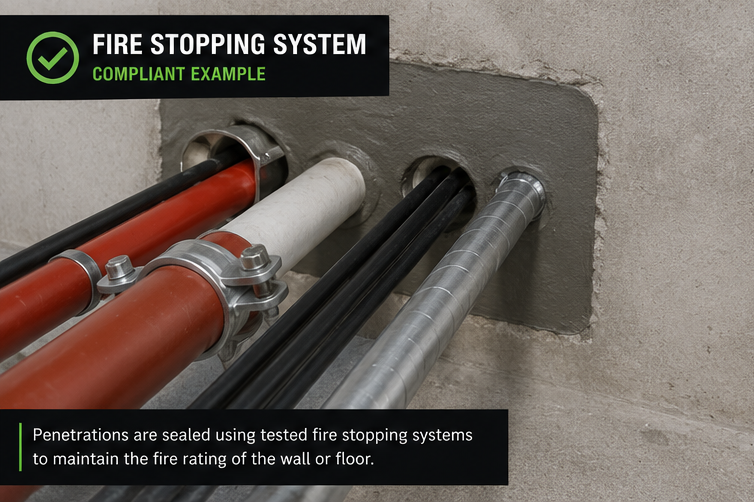
Fire Stopping System
Example of a tested fire stopping system protecting service penetrations.
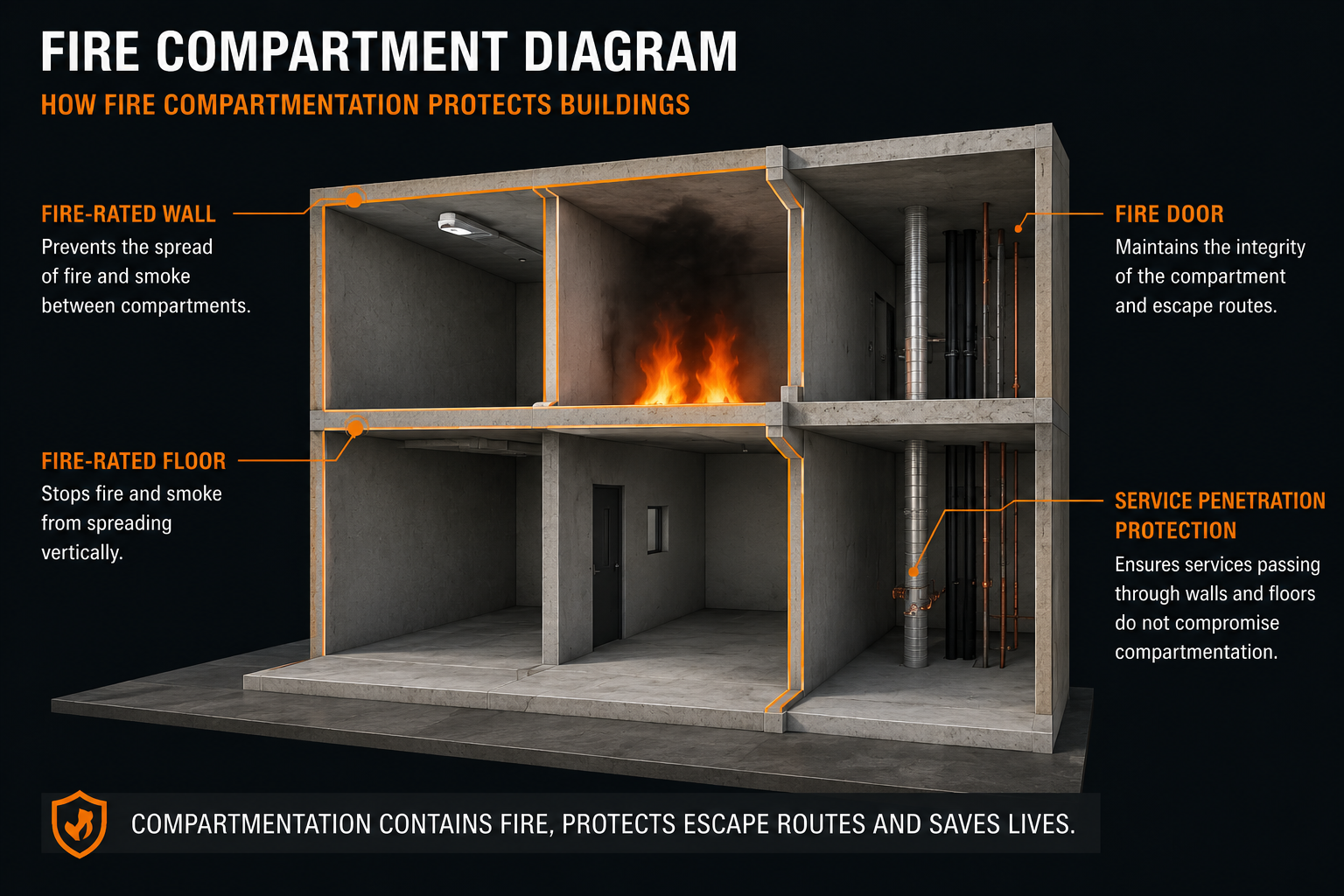
Compartmentation Barrier
Fire compartmentation barrier protecting concealed ceiling spaces.
Damaged Fire Separation
Compromised fire-rated barrier requiring remediation works.
Existing Building Defect
Passive fire defect identified during existing building inspection workflow.
Inspection Workflows
Identifying Hidden Building Defects
Passive fire inspections assist with identifying defects affecting fire compartmentation throughout buildings.
Existing buildings may contain concealed defects resulting from historical service installations, building modifications or damaged fire-rated systems.
Structured inspection and reporting workflows support building owners, consultants and contractors with remediation planning and compliance management.
Continue Learning
Explore More Passive Fire Topics
Continue learning about fire compartmentation, fire doors, penetration sealing systems and passive fire compliance workflows.