Sydney Passive Fire Learning
Service Penetrations
& Fire Stopping
Understanding how service penetrations affect fire compartmentation and how tested fire stopping systems help maintain passive fire performance throughout buildings.
What Are Service Penetrations?
Openings Through Fire-Rated Barriers
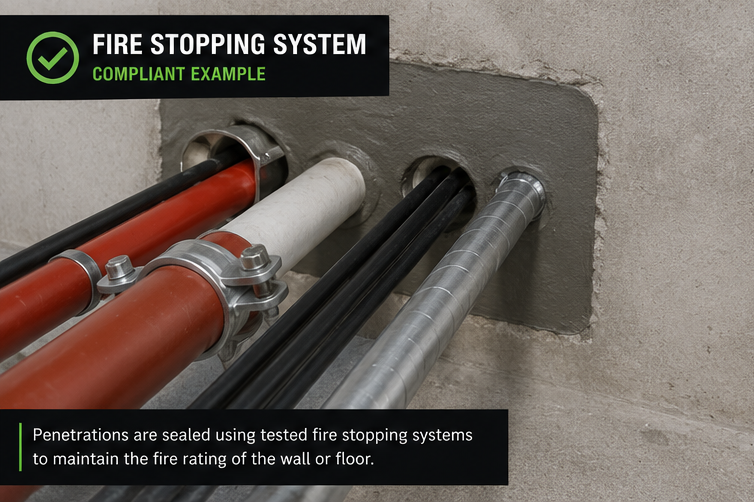
Service penetrations are openings created when pipes, cables, ducts or other services pass through fire-rated walls and floors.
These openings can compromise fire compartmentation if they are not properly protected using tested fire stopping systems.
Fire stopping systems are designed to help maintain the fire resistance performance of the wall or floor assembly.
Common Penetration Types
Fire Stopping Applications
Cable Penetrations
Electrical cables passing through fire-rated walls and floors require tested fire stopping systems.
Pipe Penetrations
Plastic and metal pipes passing through fire-rated barriers require compliant sealing systems.
Duct Penetrations
Mechanical ducts may require fire dampers and tested fire stopping systems.
Mixed Services
Multiple services grouped together require tested systems suitable for combined penetrations.
Blank Openings
Unused openings through fire-rated barriers must be properly fire sealed.
Riser Penetrations
Vertical service risers require fire stopping systems to maintain compartmentation.
Why Fire Stopping Matters
Maintaining Compartmentation Performance
Unsealed or incorrectly sealed penetrations are one of the most common passive fire defects identified during inspections.
Fire and smoke can spread rapidly through unprotected openings affecting multiple fire compartments throughout buildings.
Regular inspections assist with identifying damaged, missing or non-compliant fire stopping systems.
Australian Standards
AS1530.4 Fire Stopping Systems
Fire stopping systems tested to AS1530.4 are designed to maintain the fire resistance performance of fire-rated walls and floors.
Systems are tested for specific service types, substrates, opening sizes and fire-rating requirements.
Understanding tested systems assists with inspections, compliance reviews and remediation planning throughout existing buildings.
Continue Learning
Explore More Passive Fire Topics
Continue learning about fire compartmentation, fire doors, inspections and passive fire compliance workflows.