Sydney Passive Fire Learning
Passive Fire Inspections
& Compliance
Understanding passive fire inspection workflows, compartmentation reviews and compliance reporting throughout Sydney and NSW commercial buildings.
Passive Fire Inspections
Identifying Building Fire Safety Defects
Passive fire inspections help identify defects affecting fire compartmentation throughout buildings.
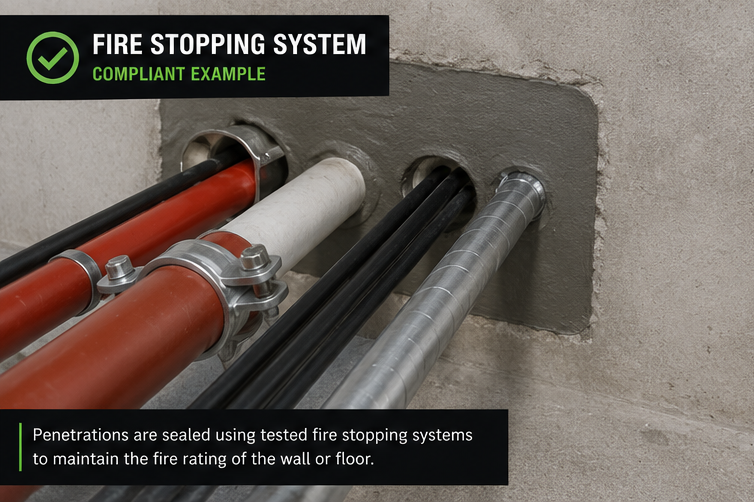
Inspections commonly identify unsealed penetrations, damaged fire-rated walls, defective fire doors and non-compliant fire stopping systems.
Existing buildings often contain concealed passive fire defects resulting from historical building modifications and service installations.
Inspection Workflow
Typical Compliance Process
Inspection
Site inspections identify passive fire defects and compartmentation issues.
Documentation
Defects are documented with photos, observations and location references.
Reporting
Compliance reports outline identified issues and remediation recommendations.
Rectification
Passive fire remediation works are completed using tested systems.
Existing Buildings
Maintaining Passive Fire Systems
Passive fire systems require ongoing maintenance and review throughout the life of a building.
Building modifications, new services and historical alterations can affect compartmentation performance over time.
Regular inspection workflows assist with identifying remediation requirements and maintaining building compliance.
Continue Learning
Explore More Passive Fire Topics
Continue learning about fire compartmentation, fire doors, service penetrations and passive fire compliance workflows.